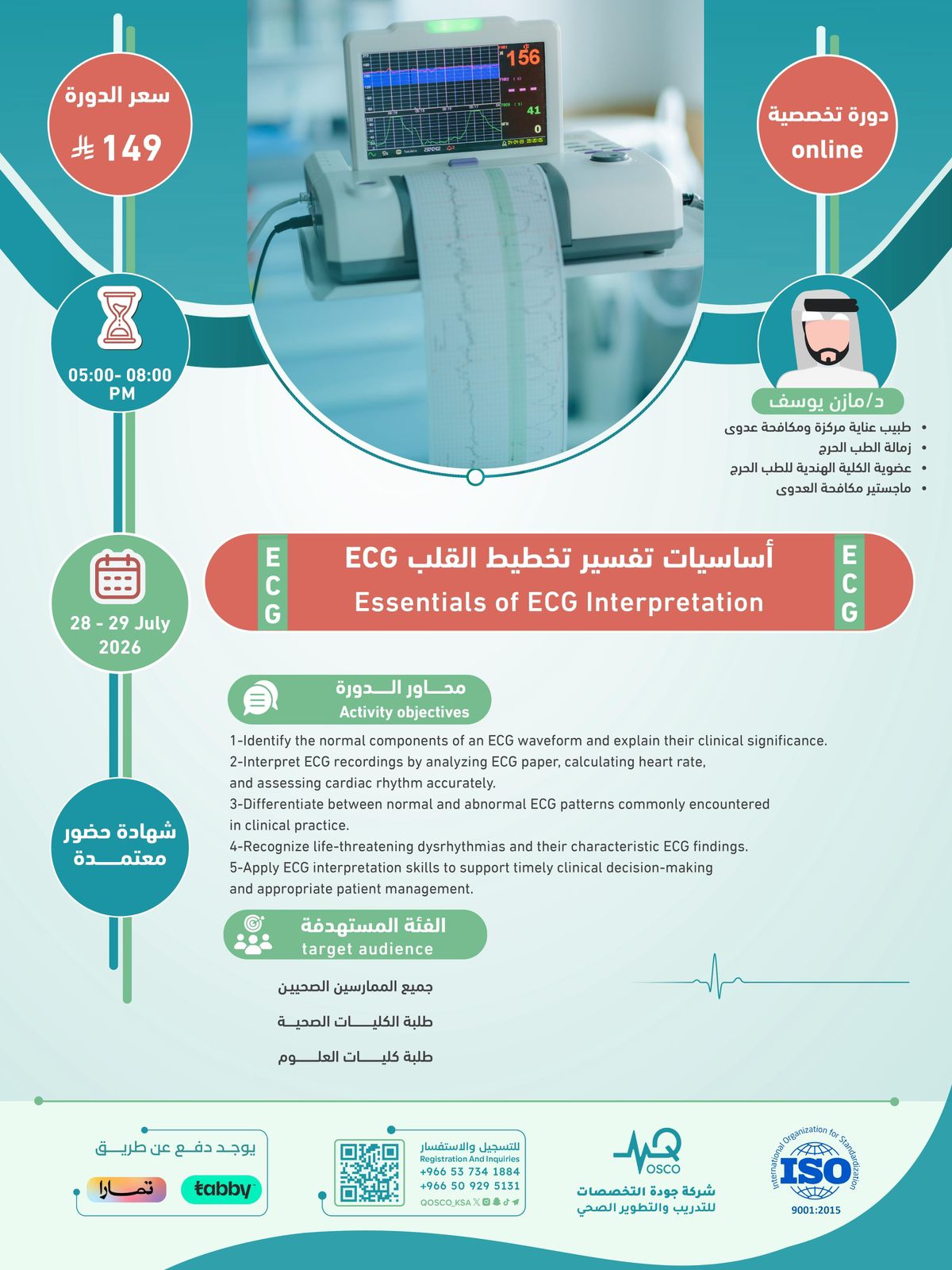
7️⃣- أساسيات تفسير تخطيط القلب ECG
تفاصيل الدورة
-
ما سوف تتعلم فى هذه الدورة
1-Identify the normal components of an ECG waveform and explain their clinical significance.
2-Interpret ECG recordings by analyzing ECG paper, calculating heart rate, and assessing cardiac rhythm accurately.
3-Differentiate between normal and abnormal ECG patterns commonly encountered in clinical practice.
4-Recognize life-threatening dysrhythmias and their characteristic ECG findings.
5-Apply ECG interpretation skills to support timely clinical decision-making and appropriate patient management.
عن الدورة
- التصنيف دورات أونلاين ( تخصصية ) معتمدة من شركة جودة التخصصات بشهادة حضور
- السعر 149 ريال سعودى
-
- اللغة العربية - الانجليزية
- المدة2 ايام
- شهادة اتمام الدورة