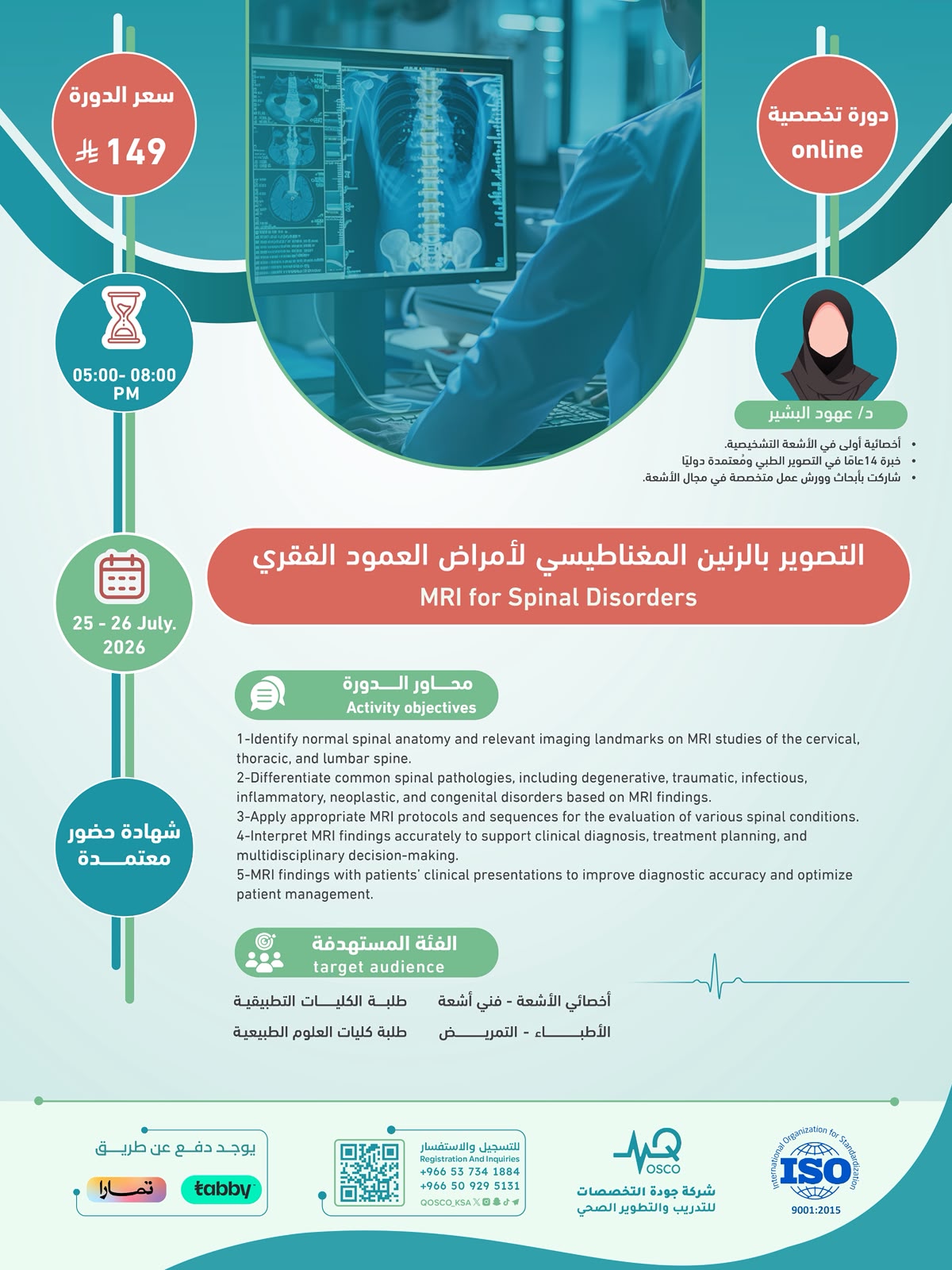
التصوير بالرنين المغناطيسي لأمراض العمود الفقري - 7️⃣
تفاصيل الدورة
-
ما سوف تتعلم فى هذه الدورة
1-Identify normal spinal anatomy and relevant imaging landmarks on MRI studies of the cervical, thoracic, and lumbar spine.
2-Differentiate common spinal pathologies, including degenerative, traumatic, infectious, inflammatory, neoplastic, and congenital disorders based on MRI findings.
3-Apply appropriate MRI protocols and sequences for the evaluation of various spinal conditions.
4-Interpret MRI findings accurately to support clinical diagnosis, treatment planning, and multidisciplinary decision-making.
5-MRI findings with patients’ clinical presentations to improve diagnostic accuracy and optimize patient management.
عن الدورة
- التصنيف دورات أونلاين ( تخصصية ) معتمدة من شركة جودة التخصصات بشهادة حضور
- السعر 149 ريال سعودى
-
- اللغة العربية - الانجليزية
- المدة2 ايام
- شهادة اتمام الدورة