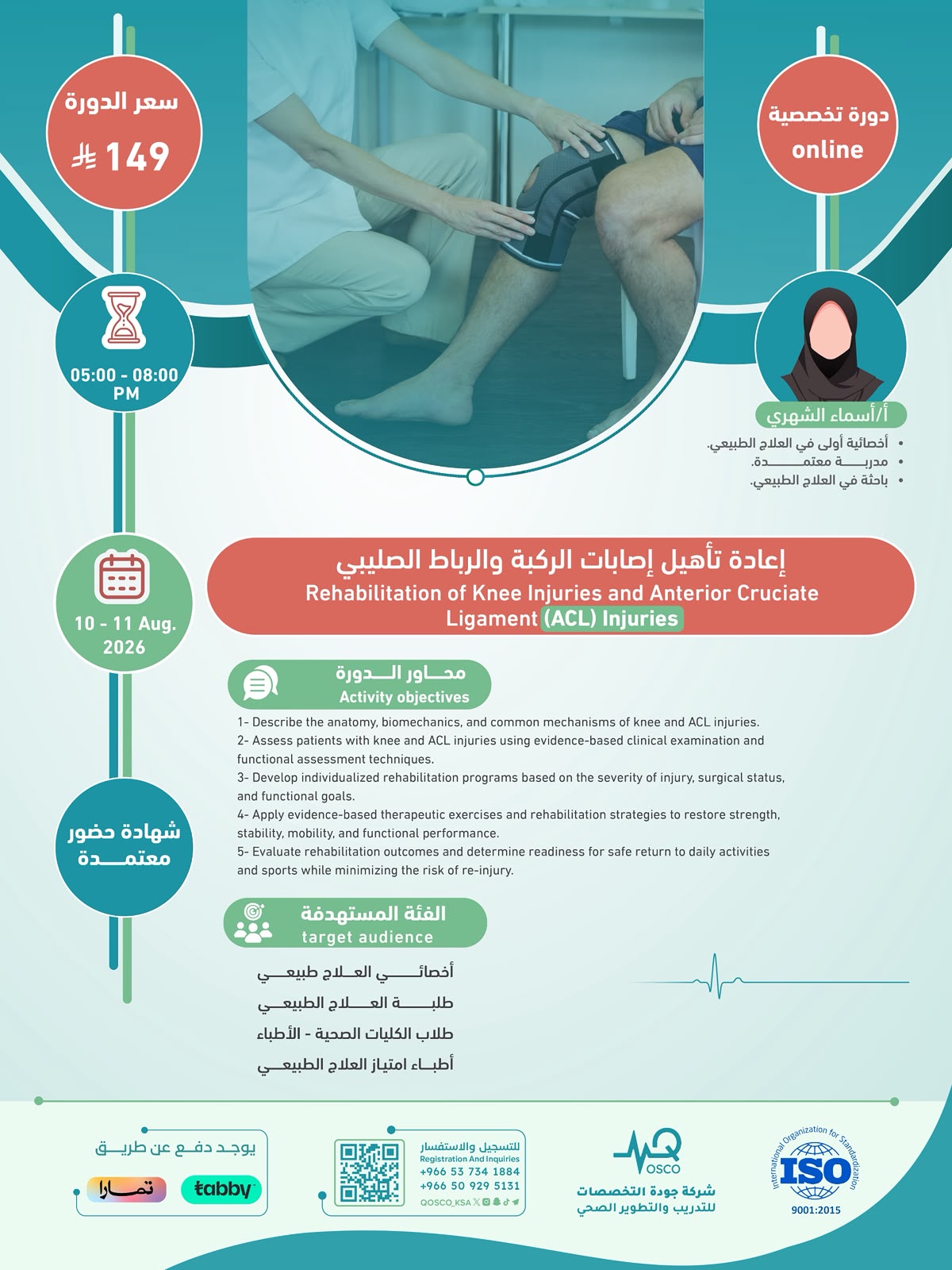
إعادة تأهيل إصابات الركبة والرباط الصليبي - 8️⃣
تفاصيل الدورة
-
ما سوف تتعلم فى هذه الدورة
1-Describe the anatomy, biomechanics, and common mechanisms of knee and ACL injuries.
2-Assess patients with knee and ACL injuries using evidence-based clinical examination and functional assessment techniques.
3-Develop individualized rehabilitation programs based on the severity of injury, surgical status, and functional goals.
4-Apply evidence-based therapeutic exercises and rehabilitation strategies to restore strength, stability, mobility, and functional performance.
5-Evaluate rehabilitation outcomes and determine readiness for safe return to daily activities and sports while minimizing the risk of re-injury.
عن الدورة
- التصنيف دورات أونلاين ( تخصصية ) معتمدة من شركة جودة التخصصات بشهادة حضور
- السعر 149 ريال سعودى
-
- اللغة الانجليزية
- المدة2 ايام
- شهادة اتمام الدورة