التشخيص المخبري لاضطرابات الجهاز الهضمي - 8️⃣
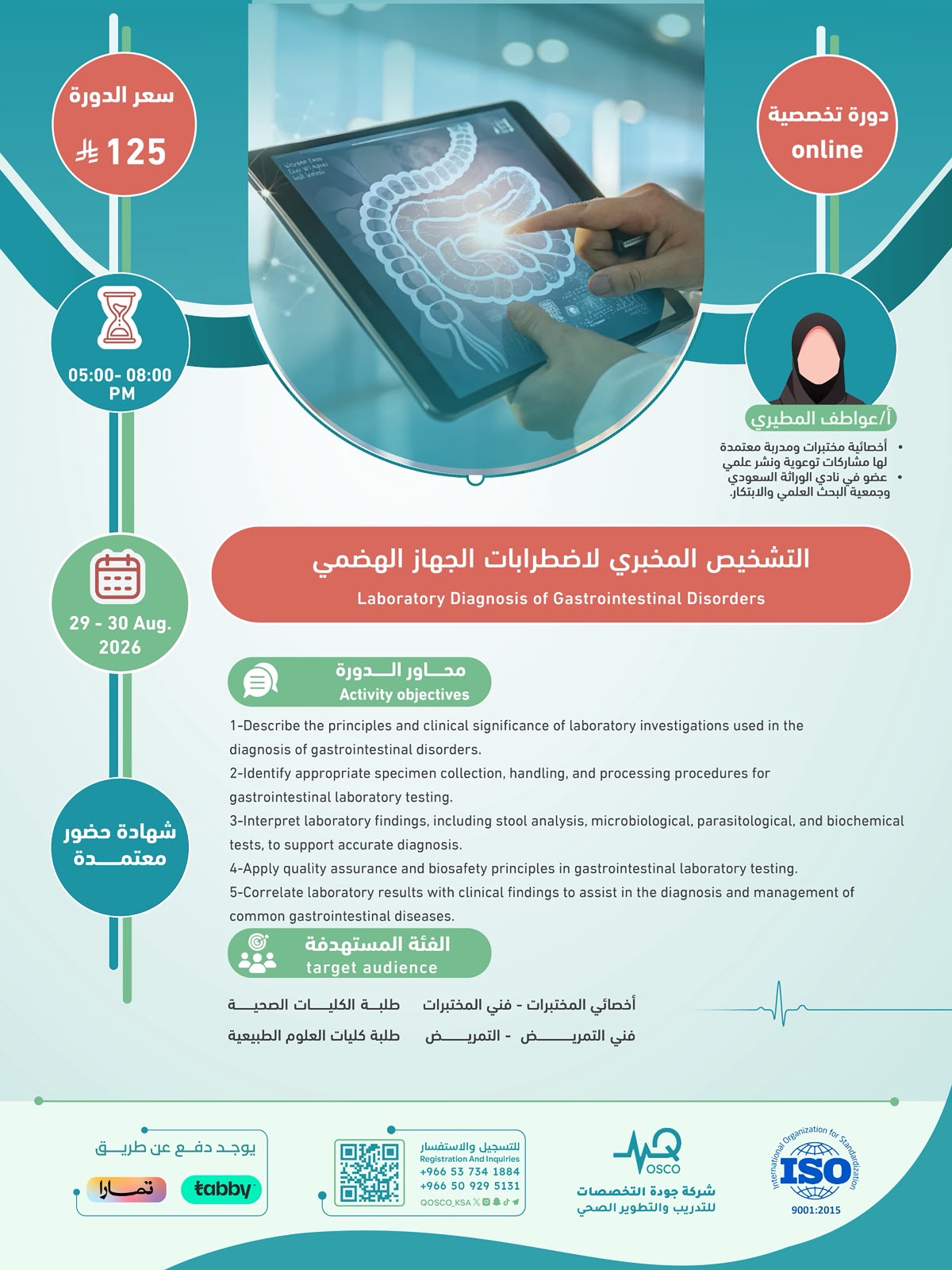
تفاصيل الدورة
-
ما سوف تتعلم فى هذه الدورة
1-Describe the principles and clinical significance of laboratory investigations used in the diagnosis of gastrointestinal disorders.
2-Identify appropriate specimen collection, handling, and processing procedures for gastrointestinal laboratory testing.
3-Interpret laboratory findings, including stool analysis, microbiological, parasitological, and biochemical tests, to support accurate diagnosis.
4-Apply quality assurance and biosafety principles in gastrointestinal laboratory testing.
5-Correlate laboratory results with clinical findings to assist in the diagnosis and management of common gastrointestinal diseases.
عن الدورة
- التصنيف دورات أونلاين ( تخصصية ) معتمدة من شركة جودة التخصصات بشهادة حضور
- السعر 125 ريال سعودى
-
- اللغة الانجليزية - العربية
- المدة2 ايام
- شهادة اتمام الدورة