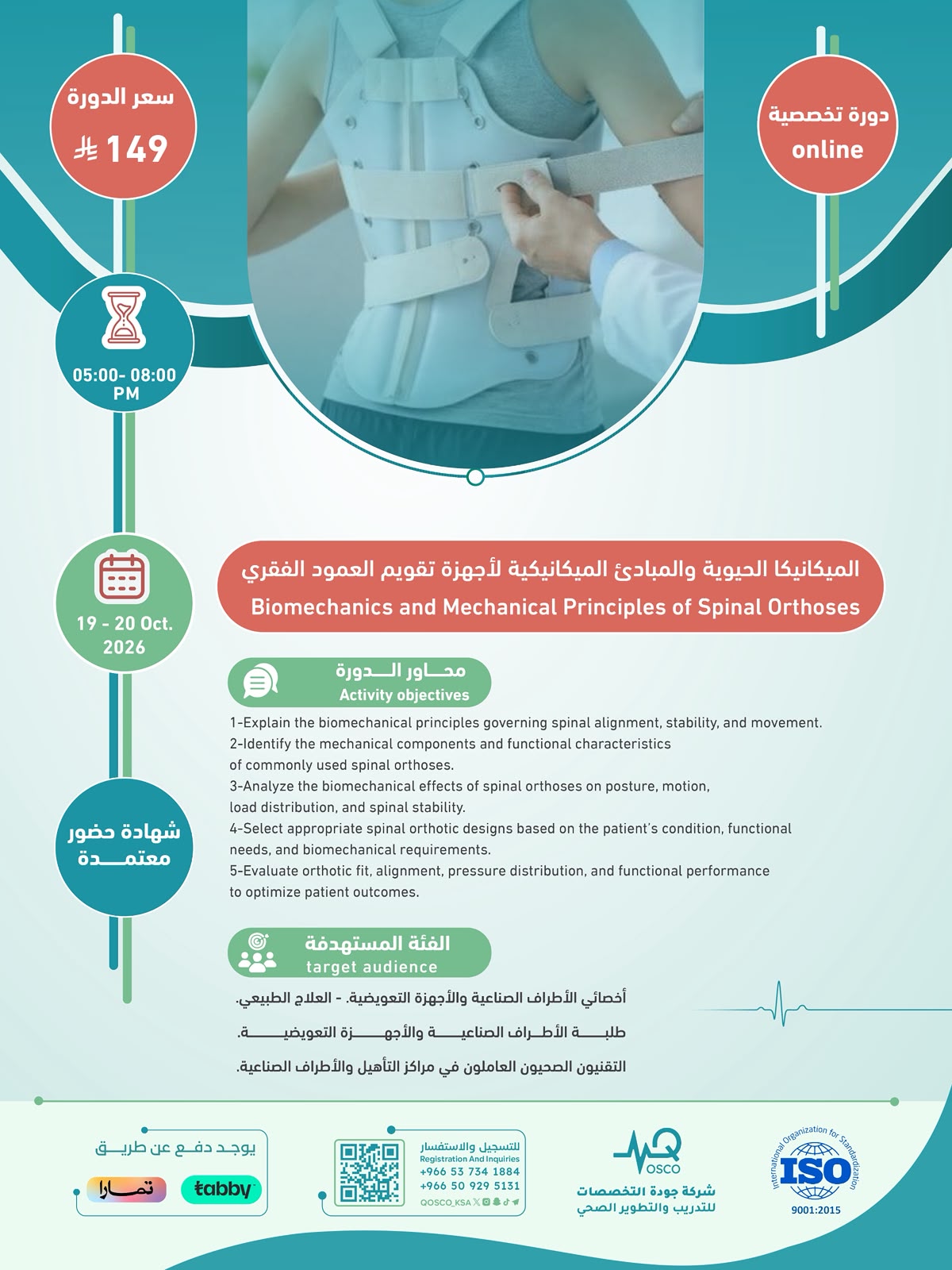
الميكانيكا الحيوية والمبادئ الميكانيكية لأجهزة تقويم العمود الفقري - 🔟
تفاصيل الدورة
-
ما سوف تتعلم فى هذه الدورة
1-Explain the biomechanical principles governing spinal alignment, stability, and movement.
2-Identify the mechanical components and functional characteristics of commonly used spinal orthoses.
3-Analyze the biomechanical effects of spinal orthoses on posture, motion, load distribution, and spinal stability.
4-Select appropriate spinal orthotic designs based on the patient’s condition, functional needs, and biomechanical requirements.
5-Evaluate orthotic fit, alignment, pressure distribution, and functional performance to optimize patient outcomes.
عن الدورة
- التصنيف دورات أونلاين ( تخصصية ) معتمدة من شركة جودة التخصصات بشهادة حضور
- السعر 149 ريال سعودى
-
- اللغة العربية و الانجليزية
- المدة2 ايام
- شهادة اتمام الدورة