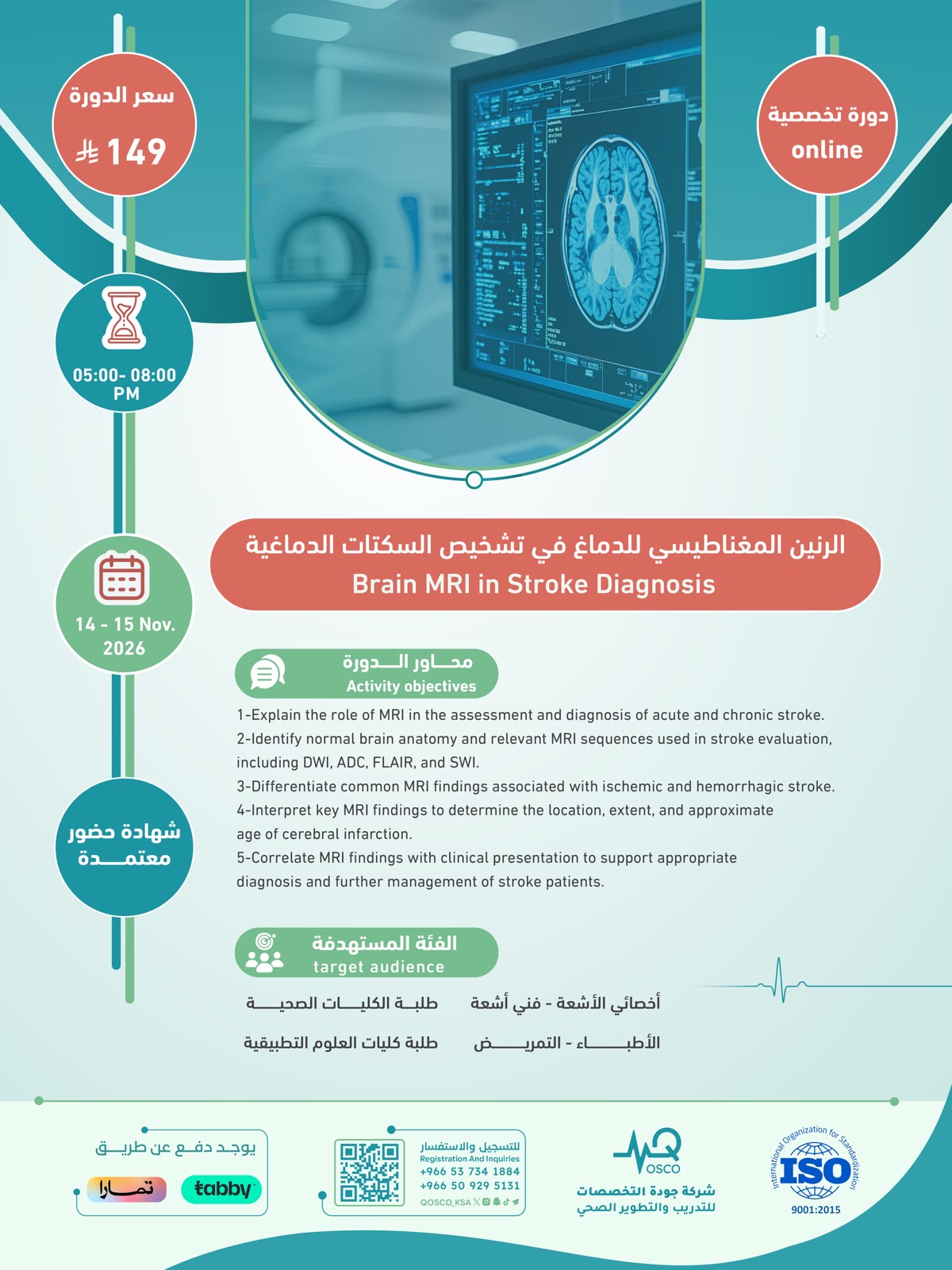
الرنين المغناطيسي للدماغ في تشخيص السكتات الدماغية - 1️⃣1️⃣
تفاصيل الدورة
-
ما سوف تتعلم فى هذه الدورة
1-Explain the role of MRI in the assessment and diagnosis of acute and chronic stroke.
2-Identify normal brain anatomy and relevant MRI sequences used in stroke evaluation, including DWI, ADC, FLAIR, and SWI.
3-Differentiate common MRI findings associated with ischemic and hemorrhagic stroke.
4-Interpret key MRI findings to determine the location, extent, and approximate age of cerebral infarction.
5-Correlate MRI findings with clinical presentation to support appropriate diagnosis and further management of stroke patients.
عن الدورة
- التصنيف دورات أونلاين ( تخصصية ) معتمدة من شركة جودة التخصصات بشهادة حضور
- السعر 149 ريال سعودى
-
- الاشخاص المسجلين0
- اللغة العربية و الانجليزية
- المدة2 ايام
- شهادة اتمام الدورة