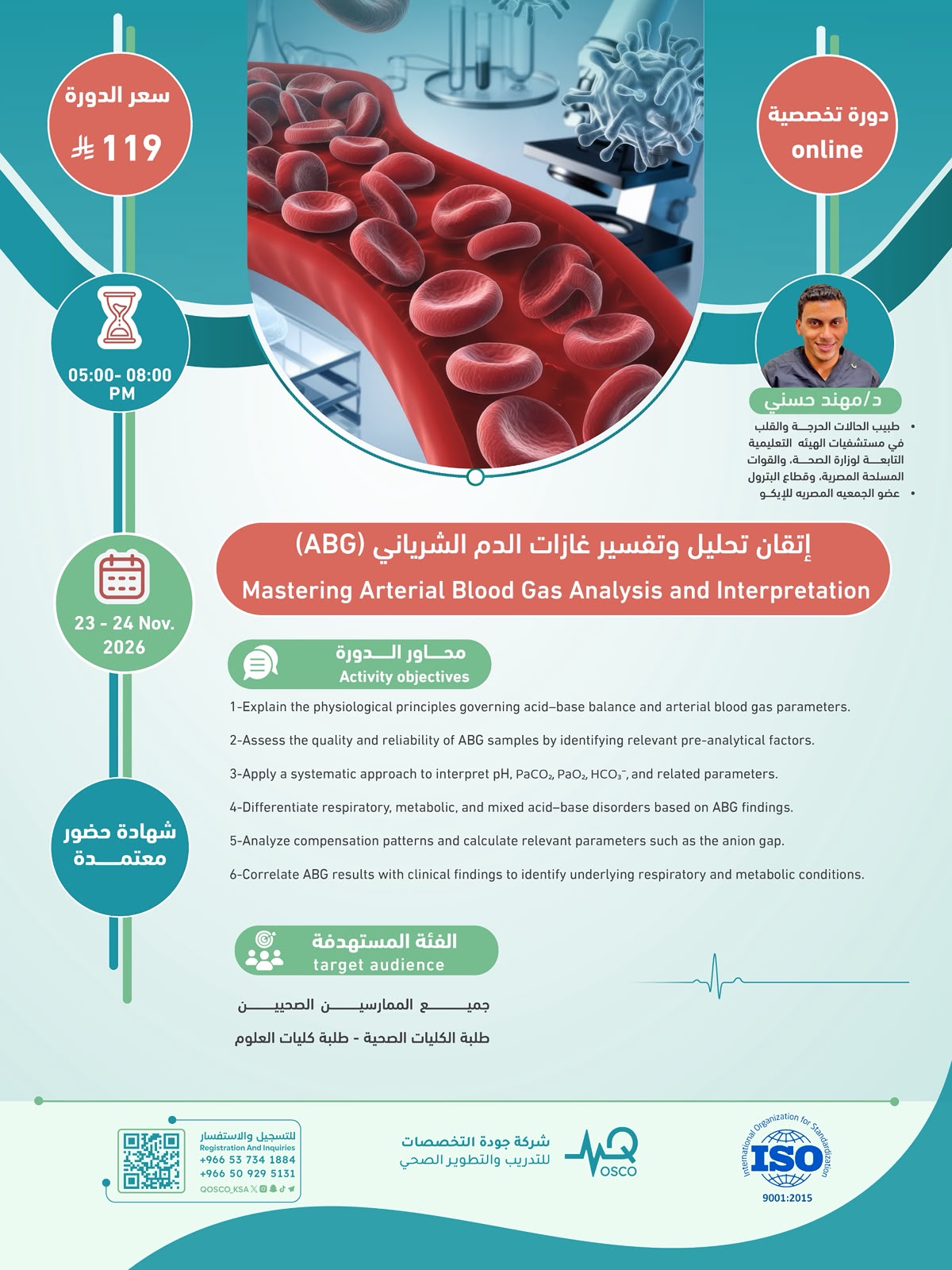
إتقان تحليل وتفسير غازات الدم الشرياني (ABG) - 1️⃣1️⃣
تفاصيل الدورة
-
ما سوف تتعلم فى هذه الدورة
1-Explain the physiological principles governing acid–base balance and arterial blood gas parameters.
2-Assess the quality and reliability of ABG samples by identifying relevant pre-analytical factors.
3-Apply a systematic approach to interpret pH, PaCO₂, PaO₂, HCO₃⁻, and related parameters.
4-Differentiate respiratory, metabolic, and mixed acid–base disorders based on ABG findings.
5-Analyze compensation patterns and calculate relevant parameters such as the anion gap.
6-Correlate ABG results with clinical findings to identify underlying respiratory and metabolic conditions.
عن الدورة
- التصنيف دورات أونلاين ( تخصصية ) معتمدة من شركة جودة التخصصات بشهادة حضور
- السعر 119 ريال سعودى
-
- اللغة العربية و الانجليزية
- المدة2 ايام
- شهادة اتمام الدورة