العلاجات التجميلية غير الجراحية لتحسين جودة البشرة - 1️⃣1️⃣
تفاصيل الدورة
-
ما سوف تتعلم فى هذه الدورة
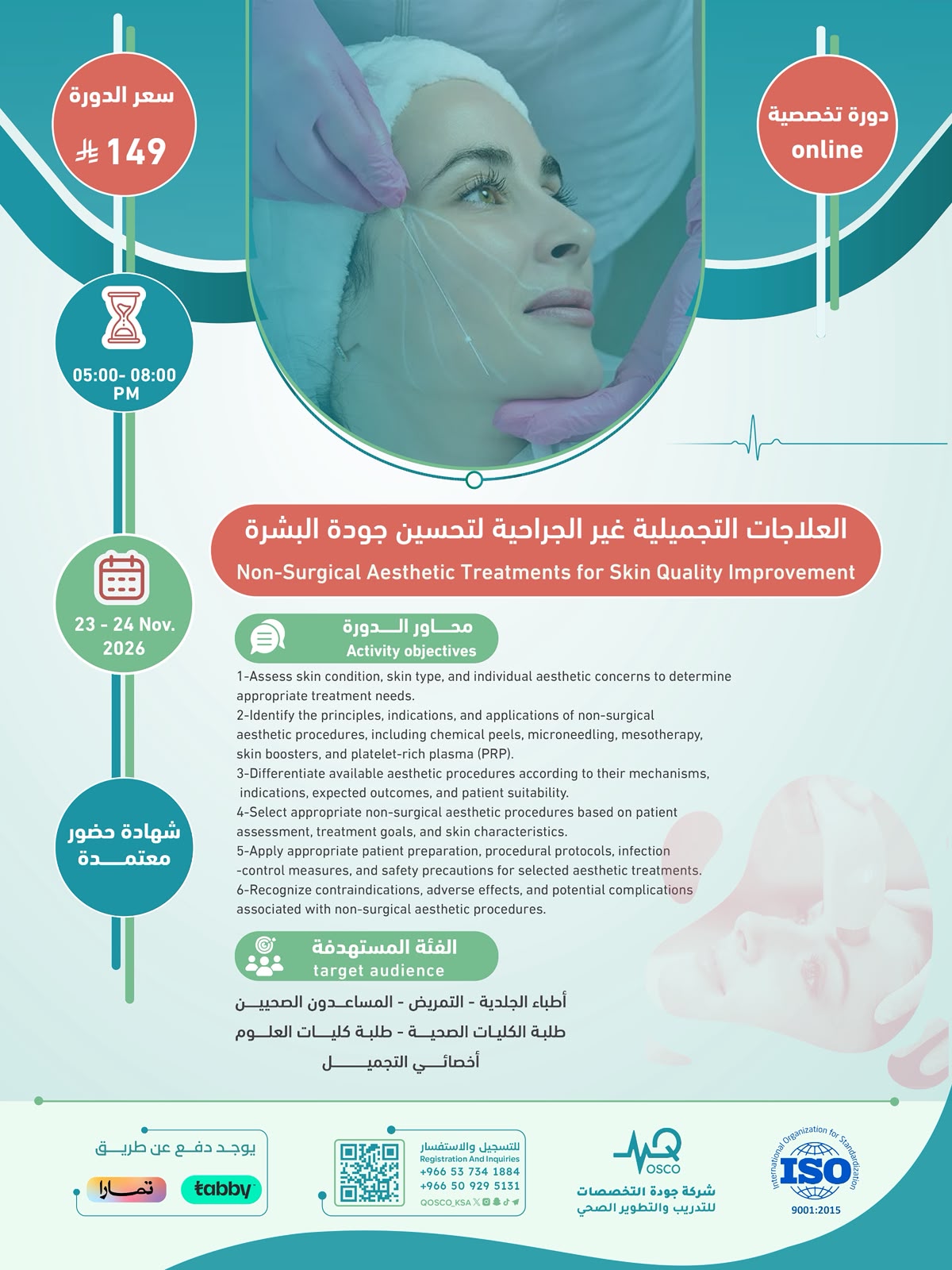
1-Assess skin condition, skin type, and individual aesthetic concerns to determine appropriate treatment needs.
2-Identify the principles, indications, and applications of non-surgical aesthetic procedures, including chemical peels, microneedling, mesotherapy, skin boosters, and platelet-rich plasma (PRP).
3-Differentiate available aesthetic procedures according to their mechanisms, indications, expected outcomes, and patient suitability.
4-Select appropriate non-surgical aesthetic procedures based on patient assessment, treatment goals, and skin characteristics.
5-Apply appropriate patient preparation, procedural protocols, infection-control measures, and safety precautions for selected aesthetic treatments.
6-Recognize contraindications, adverse effects, and potential complications associated with non-surgical aesthetic procedures.
عن الدورة
- التصنيف دورات أونلاين ( تخصصية ) معتمدة من شركة جودة التخصصات بشهادة حضور
- السعر 149 ريال سعودى
-
- اللغة العربية و الانجليزية
- المدة2 ايام
- شهادة اتمام الدورة