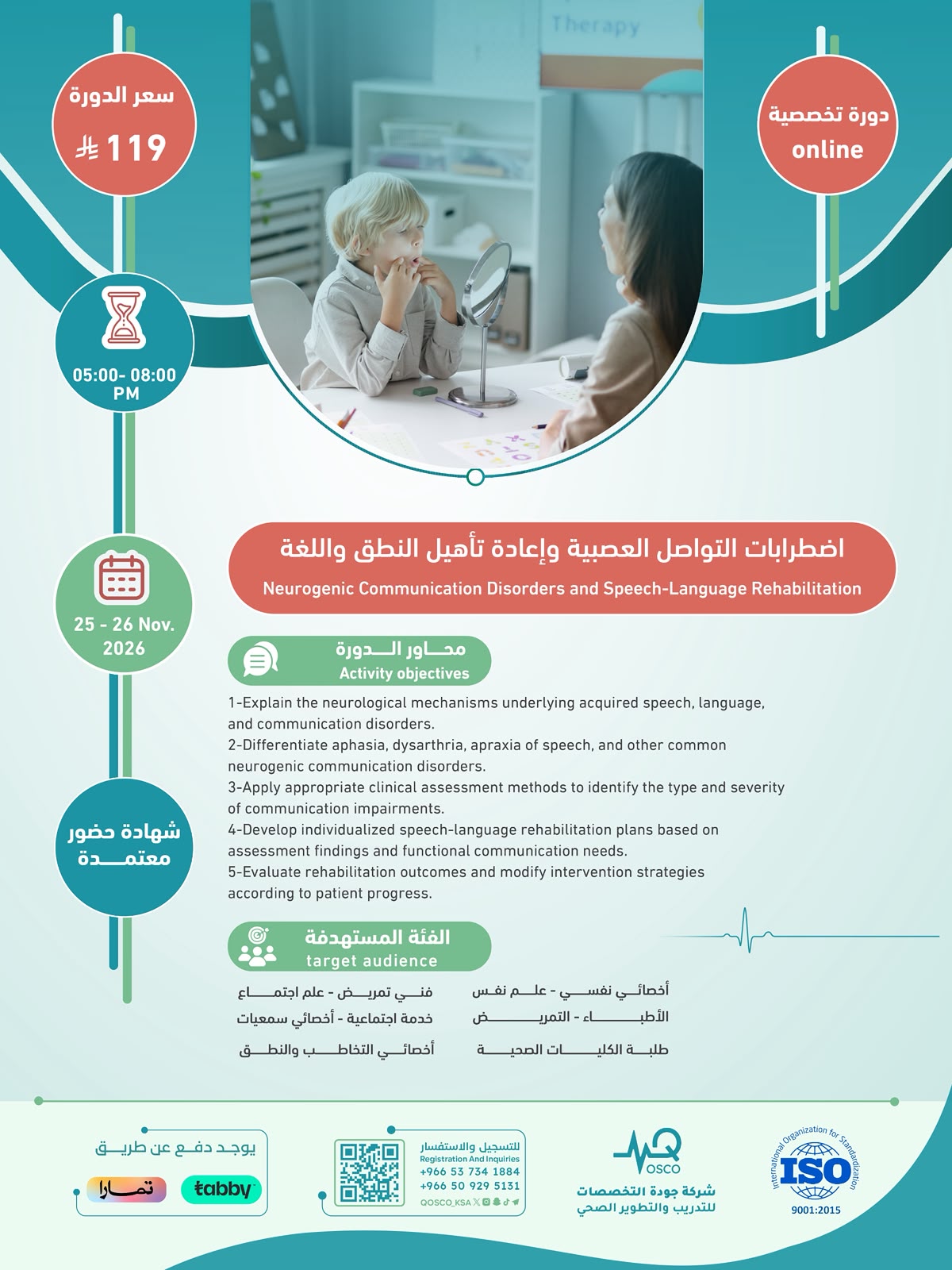
اضطرابات التواصل العصبية وإعادة تأهيل النطق واللغة - 1️⃣1️⃣
تفاصيل الدورة
-
ما سوف تتعلم فى هذه الدورة
1-Explain the neurological mechanisms underlying acquired speech, language, and communication disorders.
2-Differentiate aphasia, dysarthria, apraxia of speech, and other common neurogenic communication disorders.
3-Apply appropriate clinical assessment methods to identify the type and severity of communication impairments.
4-Develop individualized speech-language rehabilitation plans based on assessment findings and functional communication needs.
5-Evaluate rehabilitation outcomes and modify intervention strategies according to patient progress.
عن الدورة
- التصنيف دورات أونلاين ( تخصصية ) معتمدة من شركة جودة التخصصات بشهادة حضور
- السعر 119 ريال سعودى
-
- اللغة العربية و الانجليزية
- المدة2 ايام
- شهادة اتمام الدورة