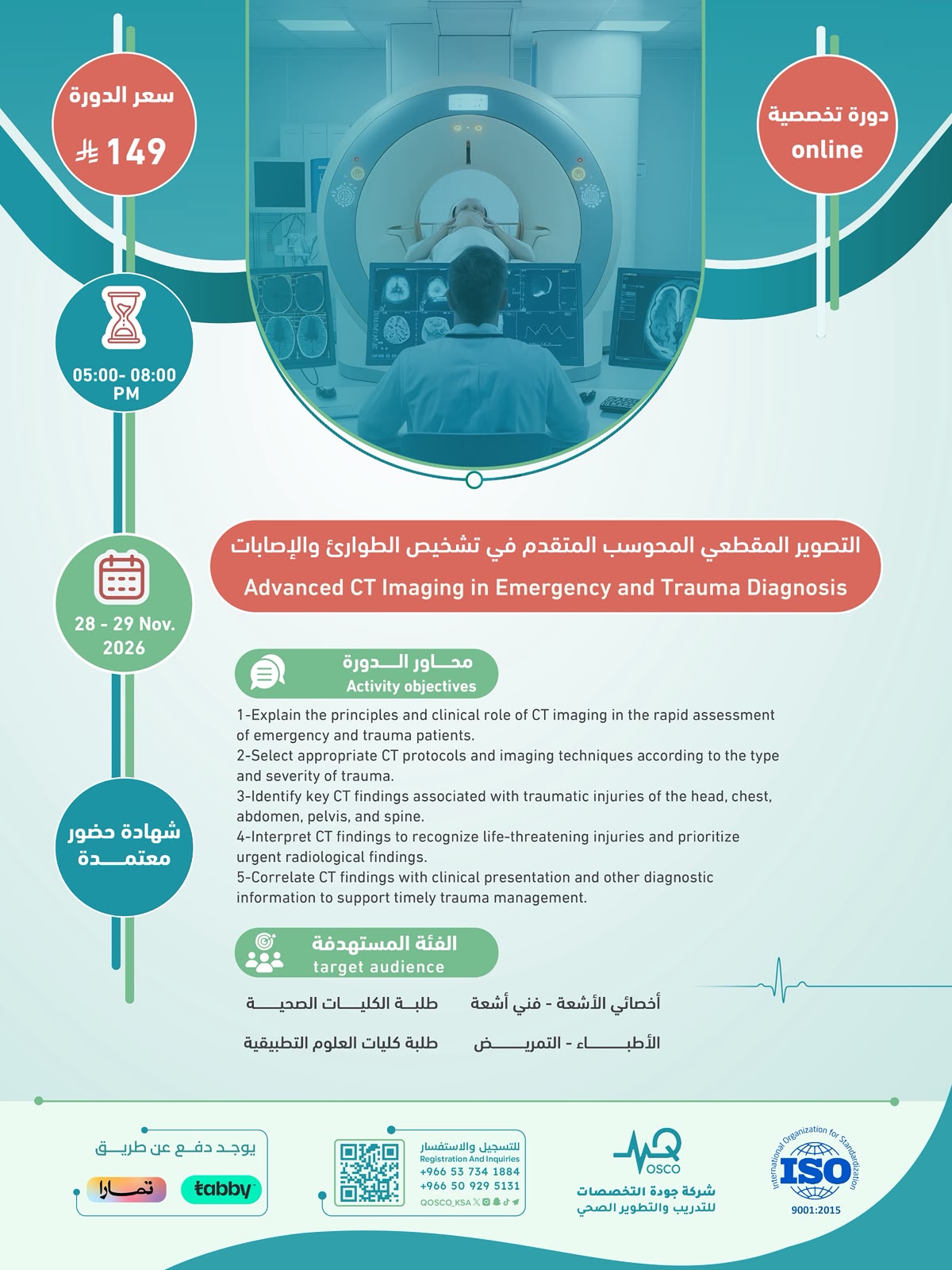
التصوير المقطعي المحوسب المتقدم في تشخيص الطوارئ والإصابات - 1️⃣1️⃣
تفاصيل الدورة
-
ما سوف تتعلم فى هذه الدورة
1-Explain the principles and clinical role of CT imaging in the rapid assessment of emergency and trauma patients.
2-Select appropriate CT protocols and imaging techniques according to the type and severity of trauma.
3-Identify key CT findings associated with traumatic injuries of the head, chest, abdomen, pelvis, and spine.
4-Interpret CT findings to recognize life-threatening injuries and prioritize urgent radiological findings.
5-Correlate CT findings with clinical presentation and other diagnostic information to support timely trauma management.
عن الدورة
- التصنيف دورات أونلاين ( تخصصية ) معتمدة من شركة جودة التخصصات بشهادة حضور
- السعر 149 ريال سعودى
-
- اللغة العربية و الانجليزية
- المدة2 ايام
- شهادة اتمام الدورة